Loading…
The History of Cyprus Podcast
cyprusthepodcast
History100 episodes
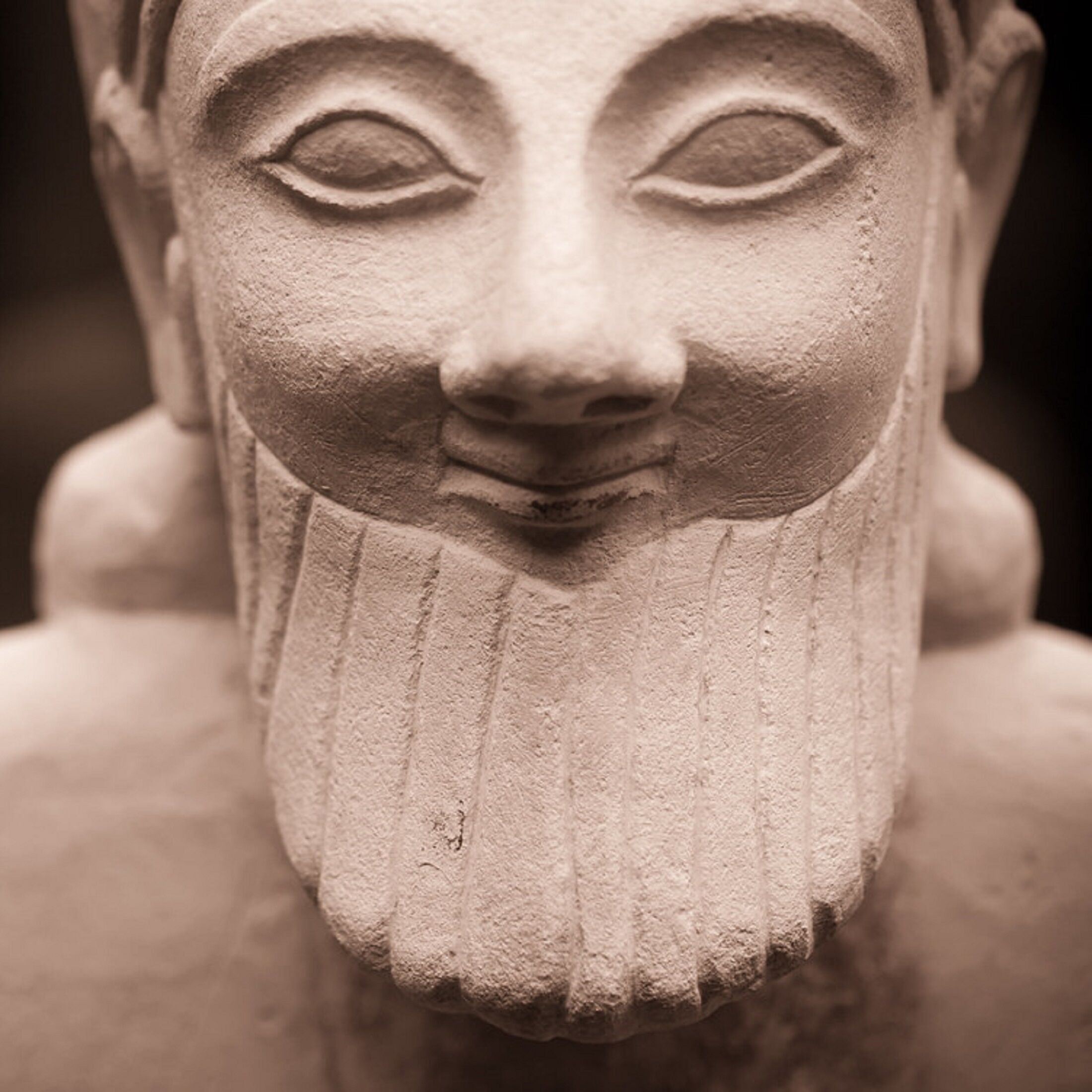
Welcome to The History of Cyprus Podcast -- a monthly series exploring the island’s past from 10,000 BCE to the 20th century. Each episode features in-depth conversations with leading scholars in archaeology, linguistics, political and social history, bringing academic insight to a wide audience. Together, we uncover the languages, cultures, conflicts, and legacies that shaped one of the Mediterranean’s most storied crossroads. Whether you’re a student, a history enthusiast, or just curious about Cyprus, this podcast offers something for everyone -- rooted in research, driven by storytelling. If you’d like to reach me, my name is Andreas. Please feel free to send me an email at cyprusthepodcast@gmail.com --------------------------------------------------------------- Follow The History of Cyprus Podcast Instagram and support the show on Patreon: https://www.patreon.com/TheHistoryofCyprusPodcast https://instagram.com/thehistoryofcyprus *The podcast image, ”Dressed for the Gods” (250BC)…
Website (opens in a new tab)Episodes
*NEW!* LVI. From the Pen of Sir Henry Light
1:40
Details
Sir Henry Light, a British officer stationed in Malta in 1814, received permission to travel through Egypt, the Holy Land, and Cyprus. Motivated by curiosity and leisure, he documented what he saw with detailed notes and sketches, capturing both the landscape and the people he encountered. In this excerpt, he describes the strong Frankish presence in Larnaca, noting the European consulates, Catholic churches, and the widespread use of Italian among the locals. A perfect segue into my next interview with Dr. Nicos Coureas as we discuss the Latin Community in Cyprus.
*BONUS!* My Cypriot Table with Irene Matys
37:29
Details
In this episode, I speak with award-winning cookbook author and food storyteller Irene Matys about her internationally acclaimed cookbook, My Cypriot Table, winner of the Gourmand World Cookbook Award for Best Mediterranean Food Culture Book in the World and, most recently, a 2026 Taste Canada Awards finalist. Irene shares her journey from being displaced from her home in Famagusta to building a new life in Canada as a refugee, and how those experiences inspired her cookbook. We also explore the rich traditions of Cypriot cuisine, the stories behind some of her favourite dishes, and the…
*NEW EPISODE!* 55. The Grenglish Project: Cypriot Greek in the Diaspora with Anna Charalambidou and Petros Karatsareas
41:48
Details
In this episode, I’m joined by Dr. Anna Charalambidou and Dr. Petros Karatsareas—two linguists whose work explores how language, identity, and culture evolve in Cypriot and diasporic communities. Together, they founded The Grenglish Project, which documents and celebrates the distinctive mix of Cypriot Greek and English spoken by London’s first-generation Cypriots. We discuss the history of Cypriot migration to the UK, how communities formed, and how their language adapted over time. From code-switching and new hybrid words to shifting attitudes about “correct” Greek, Anna and Petros reveal…
*SPECIAL!* Learning Greek, the Cypriot Way! Cyprusays® with Effie & Costas Athanassiou
31:14
Details
If you ever wanted to learn Cypriot Greek, it's never been easier. Cyprusays® is a language learning app designed to help learners speak Cypriot Greek naturally and confidently. In this Special "Primary Source," I speak with Australian born Effie Athanassiou, the Founder and CEO, along with her husband, Costas Athanassiou, serving as Executive Partner. The app goes beyond standard Greek to focus on the expressions, pronunciation, and cultural context that make the Cypriot dialect unique. Through short, engaging lessons, real-life phrases, and cultural insights, Cyprusays helps learners sound…
54. From Sufis to Secularists: Identity and Religion amongst Turkish Cypriots with Mete Hatay
51:30
Details
In this episode, we explore the complex history and contemporary character of Turkish Cypriot Islam, a tradition often described as highly secular, private, or even residual. My guest, Mete Hatay (Senior Research Consultant from the Peach Research Institute in Oslo), helps me unpack the many explanations Turkish Cypriots themselves have given for this secularism -- from claims of Alevi or crypto-Christian ancestry to broader narratives shaped by modern Turkish nationalism and a long history of religious marginalization. We trace Islam’s arrival in Cyprus and examine how early patterns of…
LIV: William Turner's Observations on Turkish Cypriots
1:32
Details
William Turner, a British traveller in the early 1800s, left one of the more vivid foreign descriptions of Cyprus under Ottoman rule. He claimed that Turkish Cypriots practiced a more relaxed form of Islam than he had seen in major Ottoman cities -- pointing to things like drinking, eating pork, and looser religious habits, though his comments reflect both his biases and limited encounters. He was also struck by how Turkish Cypriot women moved unveiled in public, which contrasted sharply with the norms he knew from Constantinople. While not a literal portrayal of the whole island, Turner’s…
53. Fragments of Faience, Glints of Gold: Cyprus and Egypt in Contact with Louise Steel
49:27
Details
Dr. Louise Steel is an archaeologist whose work focuses on challenging colonial interpretations of Cypriot history by emphasizing the agency of the local population. Through postcolonial theory, she encourages a re-evaluation of Cyprus not as a passive recipient of outside influence, but as an active participant in Bronze Age interconnectivity--especially through trade and cultural exchange. She uses the concept of the "Third Space" to frame Cyprus as a dynamic cultural middle ground, particularly during the Late Bronze Age, when the island thrived through the copper trade and maintained…
Primary Source LIII: The Misfortunes of Wen-Amun
2:29
Details
In the early 11th century BCE, the Egyptian official Wen-Amun was dispatched on a diplomatic mission to Byblos to acquire timber for the sacred barque of Amun-Ra. His journey quickly unraveled -- pursued by the Tjekker, one of the Sea Peoples active in the region -- Wen-Amun was blown off course and landed in Alashiya (Cyprus). There, he faced a hostile reception, as the locals approached seemingly intent on violence. Brought before Princess Hatiba, Wen-Amun, desperate and stranded, called out to see if anyone could understand Egyptian. Remarkably, one man stepped forward to translate his…
52. When Kinship Failed: Cyprus & The Black Death with Tassos Papacostas
1:00:50
Details
"Out of necessary cruelty, fathers abandoned their sons, and sons fled from their fathers, as the evident danger overcame all the rules of kinship, love, and nature." - Francesco Loredano AKA Henry Giblet on the Plague in Cyprus, 1660. Historian Tassos Papacostas joins The History of Cyprus Podcast to unravel the devastating impact of the Black Death on the island of Cyprus. While many are familiar with the broader European toll of Yersinia pestis, Papacostas helps us trace the origins, symptoms, and staggering mortality rate of the plague — and brings the conversation home to the Eastern…
*BONUS!* Building and Living an Archaeological Fieldwork Project with Luca Bombardieri
18:47
Details
Luca Bombardieri, Associate Professor in Aegean and Cypriot Archaeology at the University of Siena in Italy and the scientific director at the Erimi Archaeological Project in Cyprus, explores what it really means to direct an archaeological excavation. He highlights his unique philosophy of living on-site at Erimi and walks listeners through the complex, behind-the-scenes work that goes far beyond digging -- surveying, soil sampling, conservation, documentation, and required coordination with institutions like the Cyprus Museum. He also tackles major challenges such as looting, the race to…
Primary Source LII: Loredano & The Black Death
2:25
Details
The Black Death swept across Europe in the mid-14th century, killing millions and leaving entire regions devastated. No corner of the continent was spared, and Cyprus too fell victim to the deadly pandemic. Giovanni Francesco Loredano, writing under the pseudonym Henrico Giblet, claimed that the plague struck Cyprus in early 1348, spreading from Famagusta and lasting a full year. He described widespread devastation, the king’s withdrawal to the “Castello Dio d’Amore,” (Saint Hilarion) and the ennobling of foreigners to replace lost nobility. Next month, I welcome back Dr. Tassos Papacostas…
51. Out of the Frying Pan and into the Fire: Cyprus Between Athens & Persia with Christian Körner
42:47
Details
After the failed revolt against Persian rule, Cyprus experienced a brief and uneasy calm. But that peace quickly unraveled, as the island was drawn into the heart of the renewed conflict between Athens and Persia, becoming a key battleground in a decades-long imperial struggle. In this episode, we explore the turbulent and often overlooked 5th century BCE in Cypriot history -- the period between the failed Cyprus Revolt and the rise of Evagoras I. Dr. Christian Körner joins the History of Cyprus Podcast once more to help us navigate a challenging historical landscape, where much of what we…
Primary Source LI: An Excerpt from Diodorus Siculus
1:55
Details
Diodorus Siculus was a 1st-century BCE Greek historian from Agyrium in Sicily who wrote during the late Roman Republic. His most famous work, the Bibliotheca historica ("Historical Library"), is a massive universal history in 40 books that aimed to chronicle the world’s history from mythological times to his own era. In this excerpt, we hear of Cimon, a well-known Athenian general from the 5th century BCE, who helped expand Athens’ power in the eastern Mediterranean. His connection to Cyprus comes from his final campaign in 450 BCE, when he led an expedition to free the island from Persian…
50. Kypriōn Politeia: The Political Structures and Administrative Frameworks in Iron Age Cyprus with Beatrice Pestarino
1:20:43
Details
The city-kingdoms of Iron Age Cyprus have always been something of a mystery -- in fact "city-kingdom" itself is a bit of a misnomer to begin with. In this episode, I’m joined by Dr. Beatrice Pestarino, expert in ancient political systems and author of Kypriōn Politeia: The Political and Administrative Systems of the Classical Cypriot City-Kingdoms, to explore the unique administrative and ideological frameworks of these polities. We discuss the roots of Cypriot kingship, the roles of officials like the basileus, anax, and damos, and how civic and religious authority were often one and the…
Primary Source L: The Idalion Tablet
2:38
Details
…and here we are...the 50th Primary Source! Thank you so much for your continued support; it truly means a lot! ----------------------------------------- The Idalion Tablet's significance cannot be understated (not to be confused with the Idalion Bilingual). Dated to the 5th-century BCE, it offers rare insight into the island’s political, social, and linguistic history. Written in the Cypriot syllabary and the Arcadocypriot dialect of Greek, the bronze tablet records a public contract made during a siege, in which the king of Idalion and the city’s governing body (the dāmos) reward a family…
49. Saints, Synods, and Struggles: The Rise of Christian Cyprus with Young Kim
1:08:57
Details
In this episode, I welcome Dr. Young Kim, Associate Professor at the University of Illinois Chicago, to discuss the role of Cyprus in Late Antiquity. Although often seen as politically unimportant under Roman rule, Cyprus played a key part in trade, religion, and cultural life. We explore how the island became deeply involved in early Christianity--appearing in the New Testament, participating in the first ecumenical councils like Nicaea, and eventually gaining autocephalic (independent) status for its Church. We also look at how saints’ lives, or hagiographies, offer insight into everyday…
*BONUS!* Fragrant & Flavourful: On the Flaouna/Pilavuna & Identity with Anna Charalambidou
23:00
Details
In this bonus episode, I sit down with Dr. Anna Charalambidou from University College London to explore flaounes (φλαούνες/pilavunalar), the iconic Cypriot pastry. Using an ethnomethodological approach, Dr. Charalambidou examines how flaounes reflect and shape Cypriot identity across both Greek and Turkish communities on the island. We discuss their origins, regional variations, and the rich tradition of flaouna-making, uncovering how this beloved pastry connects generations and communities.
Primary Source XLIX: An Excerpt from St. Epiphanius' Panarion
2:41
Details
St. Epiphanius ranks among the most important and well-known saints of Cyprus. Ordained as Bishop of Constantia (Salamis) in the 4th century, he was a steadfast defender of (o)rthodox Christian practice and belief. In fact "Epiphanius was respected not only for his piety and rectitude but for his learning. Churches far from Cyprus consulted him on doctrinal issues." In this dramatization, we hear an excerpt from The Panarion -- a theological treatise written by St. Epiphanius himself. Also known as the "Medicine Chest," the Panarion addresses 80 heresies, many emerging in the post-Nicene…
*BONUS!* Sun, Sand...and Scandinavians? Vikings in Cyprus
7:19
Details
OK so "Vikings in Cyprus" is a bit hyperbolic as the term Viking tends to suggest pre-Christian marauding warriors who pillaged and plundered all over Europe -- which Cyprus didn't experience. But Scandinavians? Most certainly! Over the past couple of months, I have been scouring the sources for references to Scandinavians and their presence in Cyprus. So far, I have identified four key witnesses to this phenomenon, all from different parts of the Scandinavian world. Chronologically they are: The Danish cleric Saxo Grammaticus, who first writes of King Erik the Evergood of Denmark's death and…
48. Ancient Art from Cyprus and the Mediterranean: The John & Mable Ringling Museum of Art with Joanna Smith
1:04:36
Details
In this special episode, I’m joined by Dr. Joanna S. Smith, Consulting Curator for the new permanent gallery for the Cypriot Collection at the John and Mable Ringling Museum of Art in Sarasota, Florida. With a career based on decades of fieldwork at sites like Polis Chrysochous, Dr. Smith tells the fascinating story behind The Ringling Museum's ancient art collection. She traces it from the dreams of John Ringling, a circus magnate who became an art patron, to the 19th century explorations of Luigi Palma di Cesnola. The conversation culminates in a look ahead to “Ancient Art from Cyprus and…
*SPECIAL!* Cypriot Naming Conventions and WWI Enlistment Data with Andrekos Varnava
9:08
Details
Ever heard of the names "Finikou" or "Pastirou?" Neither have I! In this bonus clip from episode 31 on "Cyprus in the Great War: The Cypriot Mule Corps with Andrekos Varnava," Andrekos helps me work through the enlistment data from my grandparents' villages. We discuss Cypriot naming conventions and the frustrating dearth of data based on the inconsistent record keeping and the unusual Cypriot names from the period in a lighthearted discussion. Enjoy! Some of the roll call can be found in Andrekos' book, "Serving the Empire in the Great War."*…
47. Signs, Scripts & Silence: Cypro-Minoan with Cassandra Donnelly
1:26:43
Details
Support the Podcast! Nominate The History of Cyprus Podcast for the 2026 CYDIA Award: https://www.cyprusdiasporaforum.com/nominate Cypro-Minoan is an undeciphered syllabic script in use during the Late Bronze Age, offering a rare glimpse into a local writing tradition at the crossroads of Aegean, Levantine, and Anatolian exchange. In this episode, Cassandra Donnelly breaks down what we do know about Cypro-Minoan—from its discovery and visual features to its possible uses in trade and identity. We explore the difference between script and language, discuss the curious appearance of single-sign…
Primary Source XLVII: Sir Arthur Evans and the Cypro-Minoan Script
2:14
Details
Sir Arthur Evans was a British archaeologist best known for excavating the Minoan palace at Knossos in Crete. He named the Minoan civilization, developed the idea of a pre-Greek Aegean culture, and famously (though controversially) reconstructed parts of the site. But for our purposes, Evans played a key early role in identifying and naming the Cypro-Minoan script. During his study of Aegean scripts, he noticed that some undeciphered inscriptions from Late Bronze Age Cyprus resembled the Linear A script of Minoan Crete and he coined the term Cypro-Minoan to describe these signs, believing…
46. By Sword and By Song: The Byzantine Warrior Hero with Chrysovalantis Kyriacou
50:54
Details
In this episode, I'm joined again by Dr. Chrysovalantis Kyriacou where we discuss the ακριτικά τραγούδια i.e., the Acritic Songs! These are heroic ballads from the borderlands that emerged between the 9th and 11th centuries, highlighting semi- mythological figures like the legendary Digenis Akritas. Passed down through performances at festivals and weddings -- often created and performed by or for rural peasants -- these songs provide rare insight into the lives, struggles, and values of marginalized medieval communities. Their transmission reflects both elite and popular storytelling styles,…
*SPECIAL!* Dark Christmas Folklore in "Motherwitch," a Film by Minos Papas
44:09
Details
Merry Christmas! 'Tis the season to light your fireplaces and put out your colanders -- the 12 Days of Christmas are here! And of course you know, that means those pesky Kalikantzari (Christmas goblins) are back again, sowing mischief and cruel tricks. But it's not all bad news. Minos Papas' latest feature film* is making its rounds globally and featuring at the International Film Festival Rotterdam. I had the opportunity to screen the movie a couple weeks ago and chat again with Minos. This film is truly his love letter to Cyprus, its history and its heritage. In this episode, we chat about…
Primary Source XLVI: The Acritic Songs
2:17
Details
The Acritic Songs are a collection of Byzantine folk songs whose origins date back to the 9th-11th centuries. These songs celebrate the exploits of the "Acritae," or the frontiersmen, who patrolled the empire's periphery, protecting it from Saracen (Arab) marauders. Though we don't know the exact contexts in which these songs were performed, we know that they appealed to the bottom rungs of society, the disenfranchised and the down-trodden, as the songs were adopted and adapted all over the Greek speaking world -- including, of course, Cyprus. These songs were passed down in oral tradition…
45. (in)Conspicuous Consumption: The Material Culture of Medieval Cyprus with Maria Parani
43:06
Details
Material culture-textiles, ceramics, furniture, even the games people played-offers us a window into the lived experience of a diverse society. From the magnificence of the Lusignan court, with its gold-threaded tapestries and Venetian clocks, to the humble cooking vessels of the lower classes, these artifacts reveal not only economic and social divides but also cultural exchanges that blurred the lines between Greek, Latin, and near east traditions. Yet, such information is not always easy to find. Few archaeological excavations of the settlements themselves have been conducted on medieval…
Primary Source XLV: The Travels of Wilbrand von Oldeburg
2:24
Details
To begin with, I'd like to draw your attention to the music in this primary source. It is called J. II. 9 (Turin Codex) also known as the Cyprus Codex, an anonymous manuscript created at the Nicosia court in the early 15th century during the Frankish rule of Cyprus under the Lusignan Dynasty. It is the only known source of Western music from the region and one of the rare exclusively French codices from that era. In other words, you're listening to Medieval Cypriot music that has been reconstructed by Dimitris Kountouras. The full album*, "ΜΟΥΣΙΚΗ ΑΠΟ ΤΗΝ ΑΥΛΗ ΤΩΝ ΛΟΥΖΙΝΙΑΝΩΝ: Ο ΚΩΔΙΚΑΣ ΤΗΣ…
*BONUS!* Armenian-Cypriots with Alexander-Michael Hadjilyra
37:53
Details
The history of Armenians in Cyprus is traced back to centuries, shaped by waves of migration, resilience, and cultural contributions. In this episode, I sit down with Alexander-Michael Hadjilyra to explore the deep-rooted history of Armenian Cypriots, from their earliest presence on the island to their pivotal role in modern Cypriot society. We discuss their arrival and establishment in Cyprus and how they maintained their distinct identity while integrating into Cypriot life. Hadjilyra sheds light on their contributions to commerce, education, and the arts, highlighting figures who played a…
44. Piety and Passion: Women in Medieval Cyprus with Angel Nicolaou-Konnari
1:00:42
Details
The legal status of women in medieval Cyprus was influenced by a mix of Byzantine, Frankish, and local customs. While legal frameworks varied, women often faced limitations on property ownership and inheritance rights. However, some women managed to attain positions of influence and power, challenging traditional norms. Despite societal constraints, women in medieval Cyprus demonstrated resilience, resourcefulness, and adaptability. Their contributions and agency, whether in domestic spheres, economic activities, or shaping political alliances, left an indelible mark on the island's history.…